Newsletter Subscribe
Enter your email address below and subscribe to our newsletter

 ByJohn A
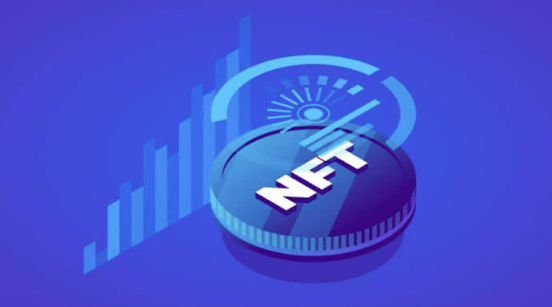
NFTs rely on blockchain to assign unique, non-fungible identifiers that prove individual asset provenance. Smart contracts, notably ERC-721 and ERC-1155, encode minting, transfer, and ownership rules. Metadata anchors authenticity while programmable logic enables royalties and cross-platform interoperability. Provenance—mint, transfer, burn—is immutable and auditable, supporting transparent markets. For creators and markets, these mechanisms shape governance and licensing models, but questions remain about efficiency, scalability, and cross-chain verification as ecosystems evolve.
NFTs derive their uniqueness from non-fungible identifiers recorded on a blockchain, which distinguish each token from all others. The mechanism ensures traceable provenance and indivisible ownership. Each token’s metadata anchors authenticity, preventing duplication. This framework accommodates free-market experimentation with asset representation, including irrelevant topic explorations and offbeat concepts, while maintaining verifiable scarcity and interoperable transferability across compatible platforms.
Smart contracts underpin NFT standards by encoding the rules for minting, transferring, and handling ownership under ERC-721 and ERC-1155. They enforce token behavior, define interfaces, and manage interactions with wallets and marketplaces. These contracts enable creators’ royalties and guarantee immutable provenance, ensuring each token’s history remains tamper-proof while enabling standardized interoperability across platforms and applications.
Provenance and royalties in practice for NFTs hinge on how history and payments are recorded and enforced across networks. Provenance tracking ensures artifact lineage is immutable and auditable, spanning mint, transfer, and burn events. Royalty enforcement relies on programmable rules embedded in contracts and marketplaces, enabling ongoing creator compensation despite secondary sales, while resilient cross-chain verification safeguards legitimacy and persistence.
See also: AI and Smart Building Technology
The implications for creators, builders, and markets arise from how tokenized assets leverage programmable ownership, transparent provenance, and verified royalties. This fosters decentralized creativity licensing, enabling compliant reuse and split earnings across participants.
However, energy consumption remains a design concern, driving optimization of consensus mechanisms and on-chain tooling.
Market resilience hinges on interoperable standards, clear licensing, and scalable, transparent governance.
NFTs anchor identity and history to verifiable on-chain records, ensuring uniqueness, traceable provenance, and enforceable royalties through programmable contracts. Standards like ERC-721 and ERC-1155 provide interoperable minting and transfer rules, while metadata anchors authenticity. Provenance—from mint to burn—remains immutable, fostering trust in markets and licensing workflows. For creators, builders, and markets, the synergy of standards, governance, and energy-conscious tooling enables scalable, transparent ecosystems. Like a digital signature in time, credibility endures.