
Newsletter Subscribe
Enter your email address below and subscribe to our newsletter

 ByJohn A
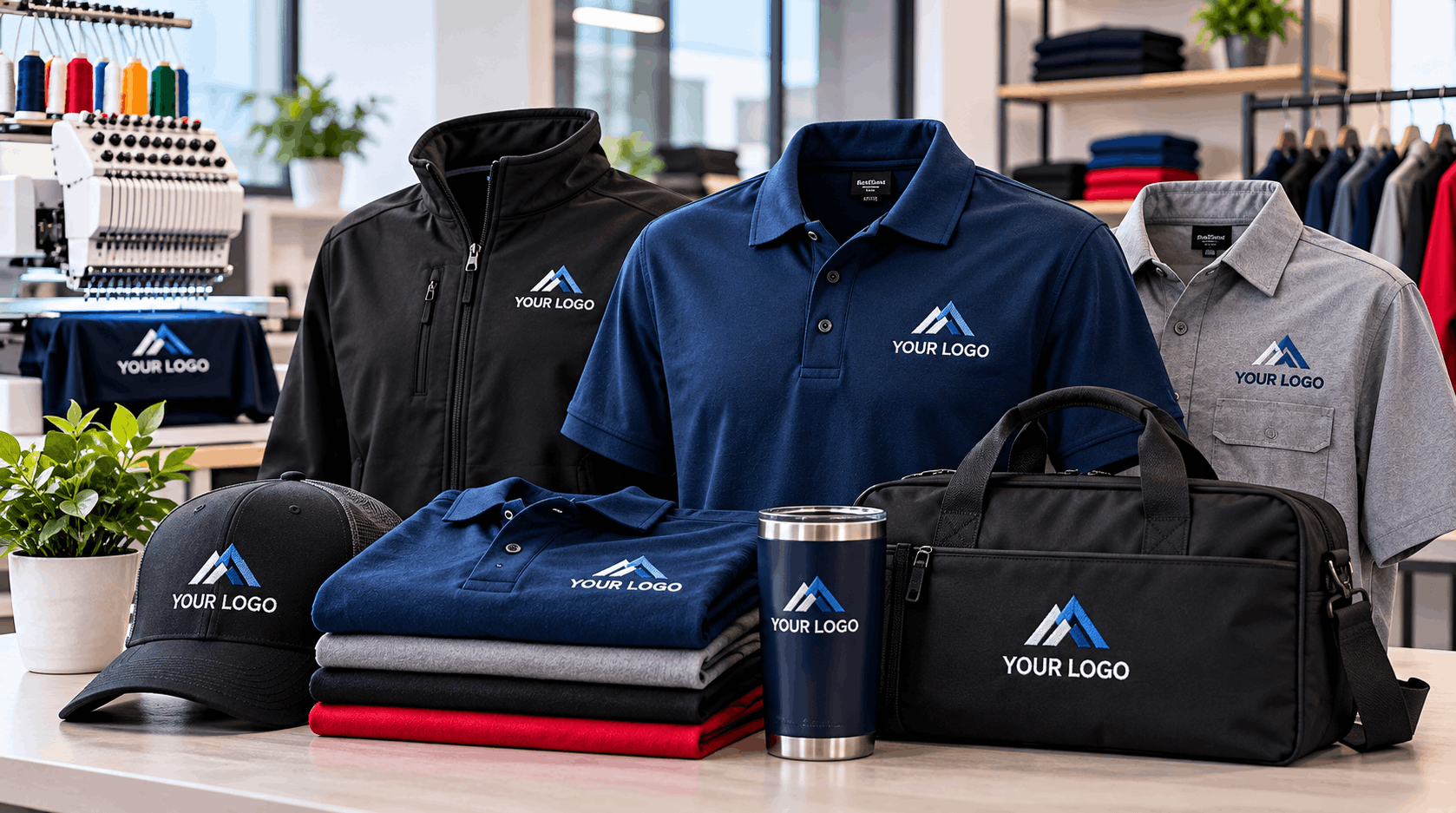
Establishing authority in a competitive marketplace requires consistent visual standards across every public touchpoint. While printed promotional tees work well for single-day giveaways, corporate teams, executive leaders, and client-facing personnel need clothing that projects stability and competence. Investing in an Embroidered Sweatshirt gives businesses an immediate path to an elevated public presentation. Stitched needlework integrates brand marks directly into the weave of the fleece, creating a clean, permanent design that outlasts surface-level print methods.
Unlike screen inks or transfer films that degrade with regular laundering, high-tensile embroidery threads maintain their luster and crisp edges across years of daily wear. Understanding how thread selection, digitizing precision, and garment construction interact helps corporate buyers choose apparel that reflects their organization’s commitment to quality.
The primary reason businesses lean toward embroidery for corporate workwear is structural permanence. Screen printing deposits liquid plastic or pigment inks onto the exterior fibers of the knit. While durable initially, repeated exposure to mechanical agitation, hot water, and tumble drying eventually causes surface inks to fracture along fold lines or peel around the borders.
Industrial embroidery thread behaves very differently. Spun from high-tensile polyester or lustrous rayon fibers, modern commercial embroidery threads resist chemical bleach, high heat, and heavy friction without losing their vibrant color.
Because each strand pierces through the entire fabric cross-section, the design anchors itself into the foundational knit of the garment, eliminating any risk of surface delamination or flaking.
Screen printing produces a flat, two-dimensional graphic that absorbs overhead light uniformly. Industrial needlework utilizes thousands of tightly packed thread passes laid down at calculated, alternating angles, forming physical ridges and satin borders that catch light dynamically.
This physical depth conveys craftsmanship and meticulous care. When seen across a negotiation table, during an executive video presentation, or at a bustling trade exhibition, a stitched crest stands out with dimensional clarity.
The raised texture quietly signals to clients, partners, and competitors that your organization invests in premium, enduring assets rather than disposable marketing handouts.
To maximize the impact of corporate apparel, companies must select base garments that align with contemporary retail aesthetics. Pairing fine needlework with a modern silhouette like a Bella Canvas Sweatshirt brings fashion-forward cuts, tailored sleeves, and exceptional fabric softness to your corporate uniform program.
Modern professionals, especially younger corporate cohorts, prefer retail-inspired fleece that drapes naturally across the shoulders without looking boxy or unshaped. When corporate clothing feels comfortable and looks fashionable, employees gladly incorporate it into their regular weekly wardrobes outside the office.
Choosing retail-grade blanks bridges the gap between traditional corporate workwear and modern lifestyle apparel, ensuring that your branded garments receive regular public exposure.
See also: How On-Chain Data Helps Analyze Cryptocurrency
Producing clean, sharp embroidery requires strict technical discipline before the first needle strikes the fabric. Digitizing is the process of converting two-dimensional vector art into machine-readable movement commands, dictating stitch direction, density, and sequencing.
Fleece textiles present unique physical challenges because of their plush, lofty surface pile. Without proper digitized underlay stitching, fine detail lines can sink into the soft fibers, causing jagged edges and unreadable text.
Professional digitizers address this by laying down an open foundation grid of running stitches that compresses the fleece fibers flat, creating a stable, smooth base for the top satin and fill stitches.
Every needle penetration exerts mechanical tension on the knit fabric. Overloading a design with excessive stitch density turns the chest area into a stiff, bulletproof patch that feels uncomfortable against the body and causes the surrounding fleece to bunch or pucker.
Experienced decorators calibrate stitch spacing to maintain fabric flexibility while ensuring full, opaque thread coverage.
Simplifying fine graphic details, avoiding intricate line gradients, and keeping typography above five millimeters in height ensures that lettering stays sharp, legible, and crisp across every production size.
Stabilizer backing material placed behind the garment inside the embroidery hoop provides the structural tension needed to prevent fabric distortion during high-speed machine runs.
For stretchy knit fabrics like cotton-polyester fleece, heavy cutaway stabilizer backings provide the best long-term results. Tearaway backings tend to break down and dissolve during warm home laundry cycles, allowing dense thread crests to ripple or pull out of shape over time.
A quality cutaway backing remains permanently bonded behind the needlework, keeping the embroidered emblem flat, stable, and crisp throughout the working life of the garment.
Executing a high-end corporate uniform rollout requires consistent blank garment sourcing. If fabric weights, dye shades, or collar cuts vary between production batches, thread tensions must be continuously recalibrated, resulting in inconsistent stitch quality across orders.
Partnering with dependable wholesale supply networks ensures that procurement managers receive first-quality fleece with consistent dye lots and reliable case counts.
Apparel businesses and corporate procurement teams need supply partners who provide transparent warehouse stock counts and prompt freight dispatch. When suppliers face unexpected backorders, uniform rollouts stall and executive events are left without proper attire.
Partnering with established distributors like Simplstc Apparel gives brand managers and decorators dependable access to premium fleece blanks with matching dye lots and consistent sizing across cases. Sourcing blank inventory through dedicated commercial channels via simplstcapparel allows teams to plan corporate uniform programs around verified stock counts and clear freight schedules.
Maintaining a dependable supply pipeline gives your team the confidence to schedule large-scale corporate outfitting initiatives without worrying about inventory gaps or broken size curves.
Establishing an intake inspection routine when delivery cartons arrive protects your company from costly decorating errors. Once an embroidery needle pierces a garment, wholesale suppliers cannot accept it for exchange or credit.
Open cartons upon arrival and verify piece counts and size splits against your purchase order before staging items for the embroidery hoops. Pull random samples from each box to check neck ribbing, cuff seams, and shoulder stitching for loose threads or knitting flaws.
Taking the time to verify blank quality before hooping ensures smooth production runs and protects your total apparel investment.
Where you position embroidered artwork directly influences how people perceive your brand. Oversized graphics splashed across the center chest can look loud and commercial, discouraging employees from wearing the garment in casual settings.
Subtle, intentional placements transform workwear into sophisticated lifestyle clothing that employees wear with pride.
A classic two-to-three-inch monogram placed on the left chest provides a clean, executive look suitable for client meetings, business dinners, and video conferences.
Placing a discreet brand icon just above the right wrist cuff adds a refined, retail-inspired detail that catches the eye during daily handshakes, presentations, or laptop typing.
Centering a small logo across the upper back neckline maintains a clean aesthetic that stays visible without feeling promotional, turning everyday team members into authentic brand ambassadors wherever they travel.
Custom embroidery remains the benchmark for premium decorated apparel because it combines lasting structural durability with refined visual appeal. While printing techniques serve quick-turnaround promotional needs, thread work signals permanence, craftsmanship, and organizational stability.
By pairing durable, fashion-forward blanks with professional digitizing and durable polyester threads, businesses create wearable identity assets that protect their workforce and reinforce their reputation for years to come.
